
Introduction
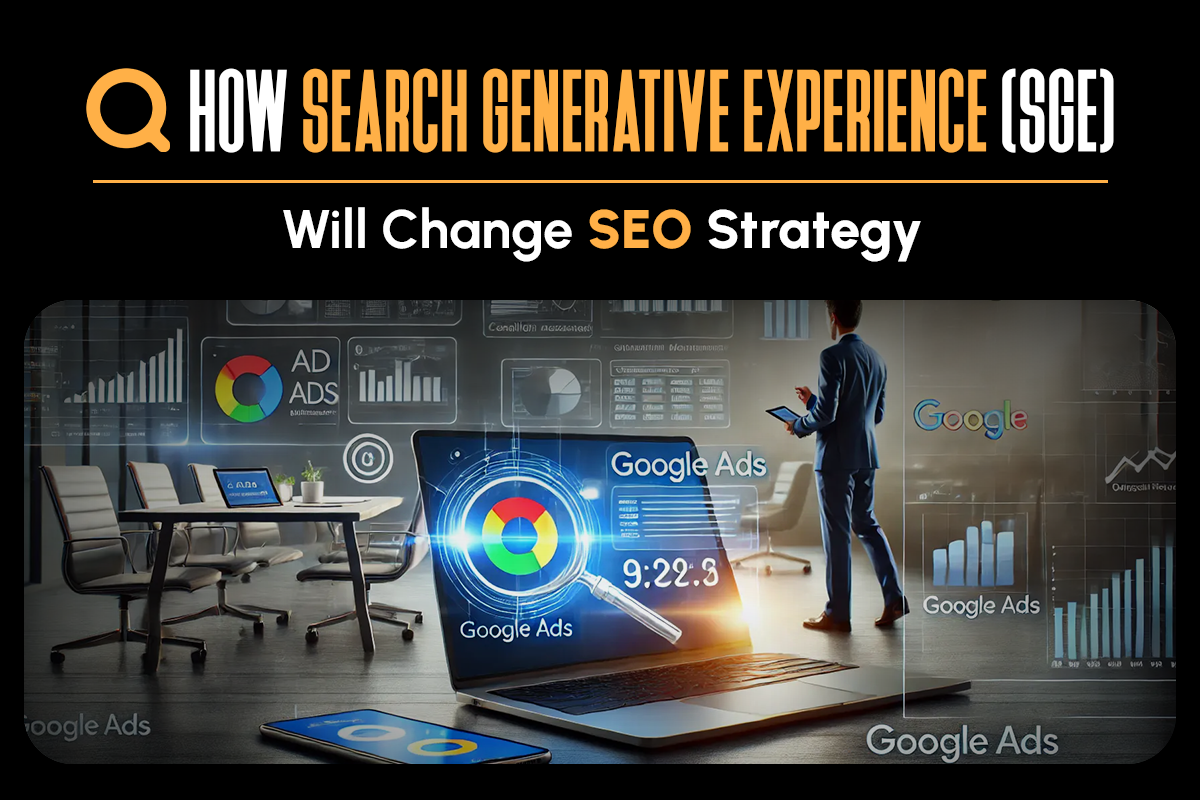
I still remember the days when SEO was all about keywords, backlinks, and page titles. You could rank a page with a few well-placed links and some optimized copy. Things have changed. Fast forward to 2025, and Google’s Search Generative Experience (SGE) is reshaping how search works, how users interact with results, and how businesses must approach SEO.
If you are a marketing decision-maker or a business owner, you may have noticed fewer clicks, even when your site ranks high. That’s not a fluke. AI-generated answers are showing up in search results, giving users what they want instantly. This means our old strategies might not be enough anymore.
Think of it like this: earlier, SEO was fishing with a net. Now, Google’s AI is fishing for you and only handing out the fish it thinks you need. If your content isn’t in that AI basket, you might get overlooked.
What Is Google SGE
At its core, SGE is Google’s shift from just listing links to generating summarized answers. Imagine asking Google a question and instead of clicking multiple sites, you get a concise, authoritative summary with insights pulled from several sources.
It’s not just text either. SGE can include charts, videos, product carousels, or local business snapshots depending on what you are searching for. Users can follow up with questions and get more refined answers. In short, it’s search evolving into a conversation, powered by AI.
For SEO professionals, this is huge. Being the #1 ranked page is still good, but being part of the AI-generated answer may become the new top ranking.
Why SGE Changes Everything for SEO
Here’s what I’ve noticed after analyzing multiple case studies and real-world trends:
Zero-Click Searches Are Rising
Users no longer need to click links to get answers. If your content isn’t formatted or structured well for AI, you could lose organic traffic even if your site ranks.
Quality Over Quantity
Thin, generic content is dead. The AI picks authoritative, in-depth, and trustworthy sources. Your content has to show real expertise and provide tangible value.
Structured Data Becomes Essential
Schema, FAQs, How To, product markup—these help AI understand your content. If your pages aren’t marked up properly, you may never appear in SGE snapshots.
E-E-A-T Matters More Than Ever
Experience, Expertise, Authority, Trustworthiness—if Google doesn’t see that your content is credible, it won’t feature it in AI summaries. Real-life examples, case studies, citations, and references aren’t optional anymore.
Click-Through Rates Will Shift
Fewer clicks don’t mean less value. It means your site might get recognized without direct traffic. Brand mentions and citations in AI-generated summaries are becoming a new form of authority.
Understanding User Intent in the SGE Era
SGE focuses on intent rather than just keywords. Users ask questions naturally, often in a conversational style. Optimizing content now means thinking like your audience:
Conversational Queries: People search like they speak. “How can I reduce my website’s bounce rate?” is different from “reduce bounce rate SEO tips.”
Follow-Up Questions: AI remembers context. Anticipate what users will ask next and provide answers in your content.
Long-Tail Focus: Broad queries are handled by AI; your best chance is highly specific, niche, and detailed content.
In other words, stop stuffing keywords and start mapping intent. Think: “What problem is my reader trying to solve? How can I solve it better than anyone else?”
The Psychology Behind AI-Driven Search
SGE isn’t just technical—it’s human. Users are drawn to content that feels conversational, authentic, and trustworthy. AI responses reward clarity, organization, and depth.
Cognitive Load Reduction: Users want answers fast. Clear headings, lists, visuals, and concise explanations reduce friction.
Trust Signals: Citing credible sources, providing author credentials, and showing domain authority improves perceived trustworthiness.
Engagement Hooks: Use storytelling, examples, and scenarios to make content memorable. AI may summarize your content, but humans remember your insights.
Practical SEO Strategies for SGE
Based on 35 years of experience, here’s how I recommend adapting SEO for the SGE era:
Build Content Hubs
Central pillar pages with cluster content show topical authority. This structure helps AI understand your expertise.
Optimize for Conversational Queries
Use FAQs, How To, and question-based headings. Speak like a human, not a bot.
Show Real Expertise
Case studies, personal insights, and original data make your content AI-worthy and human-worthy.
Use Structured Data
Schema markup for FAQs, products, How To, events—these make your content “readable” for AI snapshots.
Enhance Multimedia Content
Videos, charts, infographics. AI loves rich content; humans do too.
Focus on Trust & Backlinks
Quality citations and mentions on authoritative sites amplify your credibility.
Monitor Performance Differently
CTR may drop. Focus on engagement, conversions, brand mentions, and AI visibility rather than clicks alone.
Comparison: Pre-SGE SEO vs SGE-Era SEO
| Aspect | Pre-SGE SEO | SGE-Era SEO |
| Ranking Focus | Keyword + backlinks | AI inclusion + E-E-A-T + topic authority |
| User Interaction | Click-through | Engagement + AI summary presence |
| Content Style | Optimized text | Conversational + structured + multimedia |
| Success Metric | Organic traffic | Visibility in AI answers + conversions |
| Keyword Strategy | Short-tail focus | Long-tail + intent-driven |
FAQs
1. Will SGE kill traditional SEO?
Not at all. SEO still matters, but the goal shifts from ranking to being referenced in AI summaries.
2. How can small businesses compete with big brands in SGE?
Focus on niche expertise, original insights, structured content, and local signals. Being valuable in a specific area often beats broad but generic content.
3. What types of content work best for AI summaries?
Long-form, structured, conversational content with visuals, FAQs, and case studies are ideal.
4. Should I change how I track SEO success?
Yes. Track engagement metrics, brand mentions, AI visibility, and conversions, not just clicks.
5. Is schema markup really necessary?
Absolutely. Structured data helps AI parse and select your content for summaries. Without it, even great content can be ignored.
6. Can multimedia improve my chances of being featured?
Yes. Videos, charts, infographics, and images make content richer, which AI favors for snapshots.
7. How do I optimize for conversational queries?
Think like your user. Write questions and answers, anticipate follow-ups, and use natural language instead of keyword stuffing.
Conclusion
SGE represents a seismic shift in how SEO works. It’s no longer enough to rank #1 with generic content. Now, being part of the AI-powered answer matters as much as clicks.
For business owners and marketing leaders, this means investing in quality, structure, trust, and engagement. For SEO professionals, it means evolving from rigid keyword-focused strategies to adaptive, user-first, AI-friendly approaches.
The good news? High-value content, real expertise, and a human touch always win. SGE doesn’t replace good marketing—it rewards it. Your goal is simple: create content so helpful, so authentic, and so authoritative that AI and humans both want to share it.