
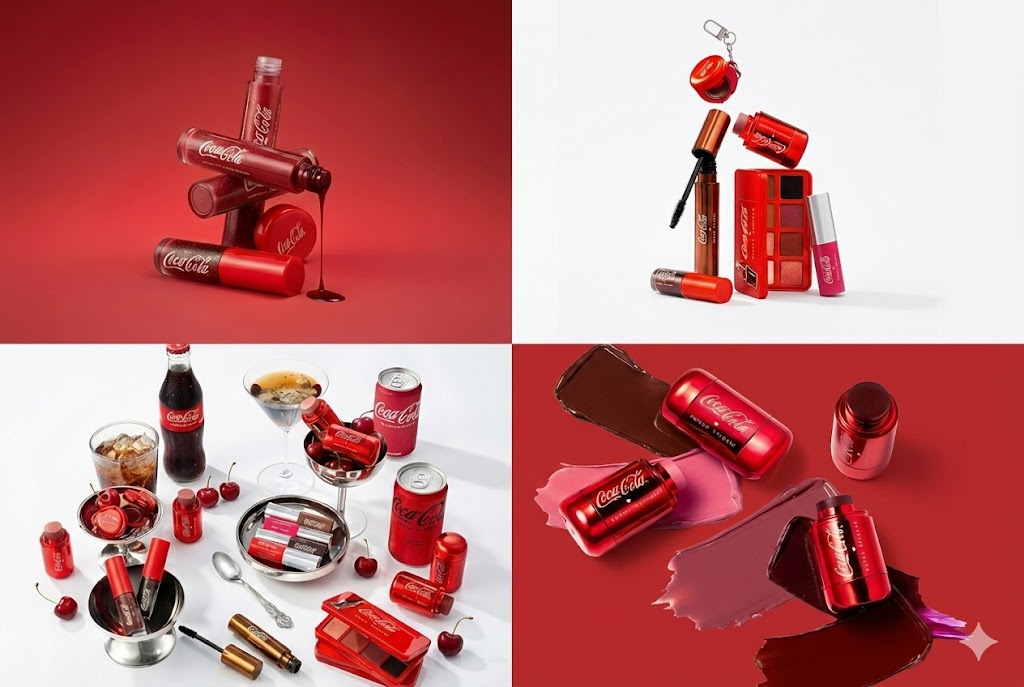
Coca cola makeup is a lifestyle branding move, not a product expansion. Through its collaboration with Bruna Tavares, Coca-Cola uses beauty products to turn brand nostalgia into wearable identity. The limited-edition collection targets Gen Z and Millennials, embeds the brand into daily rituals and strengthens long-term cultural relevance without becoming a beauty brand.
Coca-Cola has expanded into the beauty space with a limited-edition collaboration alongside Bruna Tavares. The launch represents a strategic move where Coca-Cola makeup is positioned not as a new product category, but as a lifestyle extension of one of the world’s most recognisable brands.
Below is a breakdown of the core marketing strategy behind this collaboration, explained from a brand and business perspective.
Lifestyle Branding Over Product Expansion
Coca-Cola is not trying to become a cosmetics company. The brand is extending its identity, not its core business.
This collaboration transforms Coca-Cola from a drink you consume into a lifestyle symbol you wear, positioning the brand inside personal spaces such as vanities, makeup bags and daily routines.
By entering beauty through symbolism rather than formulation leadership, Coca-Cola preserves its core brand strength while expanding cultural relevance. The product acts as an identity marker rather than a functional substitute.
Marketing intent:
Shift from consumption-based branding to identity-based branding.
Cultural Permission through Authority Transfer
By partnering with Bruna Tavares, a respected beauty entrepreneur and influencer, Coca-Cola borrows credibility and trust in the beauty space.
Instead of building a beauty division from scratch, the brand gains instant legitimacy through her expertise and established audience.
This authority transfer reduces skepticism among beauty consumers and accelerates acceptance in a highly trust-driven category. The collaboration feels endorsed rather than intrusive.
Marketing intent:
Reduce authenticity risk while entering a new category.
Sensory Translation of Brand Equity
Coca-Cola’s strongest asset is sensory memory – taste, fizz, refreshment and nostalgia.
This collaboration converts those sensations into beauty cues. “Fizz” becomes glow, Coca-Cola red is translated into lip and mascara shades and can-shaped packaging triggers instant brand recall.
The strategy ensures that even without taste, the brand experience remains instantly recognizable. Emotional memory replaces functional differentiation.
Marketing intent:
Translate emotional brand memory into physical, collectible beauty products.
Makeup as a Daily Ritual Strategy
The collection positions makeup as a daily ritual, similar to opening a cold Coke.
This embeds the brand into everyday life far beyond a drinking occasion, extending into morning routines, self-care moments and personal expression.
By associating itself with repetition and habit, Coca-Cola increases brand intimacy rather than reach alone.
Marketing intent:
Increase brand touch points without increasing ad frequency.
Gen Z and Millennial Cultural Relevance
Younger audiences value self-expression, aesthetic storytelling and social-media-first beauty products.
The Coca-Cola makeup collection is designed for TikTok and Instagram Reels, using visually striking, unboxing-friendly formats that encourage organic sharing.
The product itself becomes content, reducing reliance on traditional advertising and increasing peer-driven discovery.
Marketing intent:
Turn beauty products into shareable content engines.
Limited-Edition Drop Model
The collaboration follows a drop-based strategy that creates urgency and scarcity.
This approach allows Coca-Cola to test the beauty market, generate fast buzz and avoid long-term operational risk.
Scarcity also enhances perceived value, making the products feel collectible rather than mass-produced.
Marketing intent:
Treat products as campaigns, not permanent diversification.
Physical Products as Long-Term Media
Unlike a beverage that is consumed and discarded, makeup products remain visible for months.
Each item becomes a high-frequency brand reminder sitting on a consumer’s vanity.
This transforms personal spaces into private brand media environments with repeated exposure.
Marketing intent:
Replace short-lived ads with long-lasting physical brand presence.
Regional Strategy With Global Potential
Choosing a Brazilian beauty brand allows Coca-Cola to tap into strong local cultural relevance while leveraging Bruna Tavares’ international fanbase.
This approach supports expansion into emerging beauty markets with global export potential.
Local credibility strengthens global storytelling without forcing a one-size-fits-all launch.
Marketing intent:
Think local-first, scale globally.
Proven Collaboration Playbook
This move builds on Coca-Cola’s previous beauty partnerships with Morphe, The Face Shop and Lip Smacker.
Each collaboration reinforces the brand’s ability to stay culturally relevant without diluting its core product.
The repetition signals strategic intent rather than experimentation.
Marketing intent:
Maintain consistency in cross-category storytelling.
Strategic Overview
| Marketing Element | How Coca-Cola Executes It |
|---|---|
| Primary Strategy | Lifestyle branding through Coca-Cola makeup |
| Entry Method | Partnership with a trusted beauty brand |
| Target Audience | Gen Z and Millennials |
| Product Model | Limited-edition beauty products |
| Brand Role | Wearable identity, not a cosmetics brand |
| Core Benefit | Long-term visibility beyond beverages |
Coca-Cola uses beauty collaborations to turn brand nostalgia into wearable identity, embedding itself into daily rituals, social culture and personal expression without becoming a beauty brand itself.
Conclusion
The Coca-Cola × Bruna Tavares collaboration demonstrates how coca cola makeup functions as a lifestyle branding strategy rather than a category shift. By combining cultural authority, sensory nostalgia and limited-edition design, Coca-Cola embeds its identity into daily beauty rituals. The approach strengthens long-term brand relevance, deepens emotional connection and shows how global brands can expand influence without redefining their core business.
Frequently Asked Questions (FAQs)
What is Coca-Cola makeup?
Coca-Cola makeup refers to the limited-edition beauty collection launched by Coca-Cola in collaboration with Bruna Tavares. The collection includes eyeshadows, lip products, mascara, blush sticks, and accessories inspired by Coca-Cola’s iconic red branding and visual identity.
Why did Coca-Cola launch beauty products?
Coca-Cola launched beauty products as part of a lifestyle branding strategy. The goal is not to become a cosmetics company, but to extend the brand into personal routines, self-expression, and cultural spaces where younger consumers engage beyond beverages.
Is Coca-Cola becoming a beauty brand?
No. Coca-Cola is not positioning itself as a beauty brand. The collaboration uses a partnership-led model to explore lifestyle categories while keeping Coca-Cola’s core business focused on beverages.
Who is Bruna Tavares and why was she chosen?
Bruna Tavares is a Brazilian beauty entrepreneur and influencer with strong credibility in the cosmetics industry. Partnering with her gives Coca-Cola cultural permission and authenticity to enter the beauty space without building in-house expertise.
What products are included in the Coca-Cola × Bruna Tavares collection?
The limited-edition collection includes eyeshadow palettes, lip glosses, lip balms, mascara, stick-format blush, and makeup accessories. All products follow Coca-Cola’s signature red colour, logo, and collectible packaging design.
How does this collaboration target Gen Z and Millennials?
The Coca-Cola makeup collection is designed for visual storytelling and social sharing. Unboxing-friendly formats, bold aesthetics, and limited-edition drops make it highly compatible with platforms like TikTok and Instagram, where younger audiences discover beauty trends.
How does Coca-Cola benefit from beauty collaborations?
Beauty products act as long-term brand media. Unlike beverages that are consumed quickly, makeup stays visible on vanities for months, increasing brand recall and emotional connection without relying on traditional advertising.
Has Coca-Cola done beauty collaborations before?
Yes. Coca-Cola has previously collaborated with beauty brands such as Morphe, The Face Shop, and Lip Smacker. These partnerships show a consistent strategy of cross-category lifestyle branding rather than one-time experimentation.